Taking Turns in Music Class
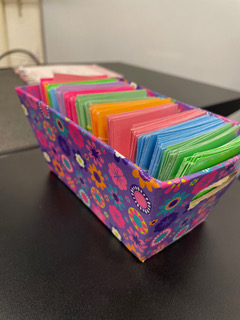
Do you every worry that you call on the same students all the time? Do you want to make sure that everyone is getting a turn during class, whether it be to answer a question, or play an instrument? Quite a few years ago I came up with a solution that works great in my situation.
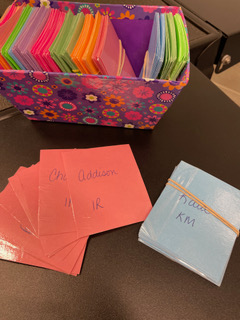
At the beginning of the school year I write each student’s name and class number on half of a 3×5 card. Then I laminate the cards and cut them in half. Once the cards are sorted, I rubber band the class all together and stick them in my little bin that sits right next to my chair at the front of the room. Whenever I need to choose students for an instrument or to answer a question, I use the cards. The students don’t ever worry about getting a turn, and I don’t have to worry about forgetting to call on students who don’t raise their hand.
Making Students Accountable in Music Class

I’ve noticed that sometimes when I do activities as a whole class not everyone is engaged. It’s easy for a student not to pay attention when the teacher is focused on the entire class at once. When I am pointing to notes on the Smart Board I can’t always see who is playing the music rhythms correctly. So I’ve been working on making a few activities that make each student in my class accountable.
I tried a notes sorting activity the other day. I saw a similar version of this and tweaked it a little to make it work better for me in my classroom. It’s a great combination of math and note values practice. I started the activity by showing the first problem.
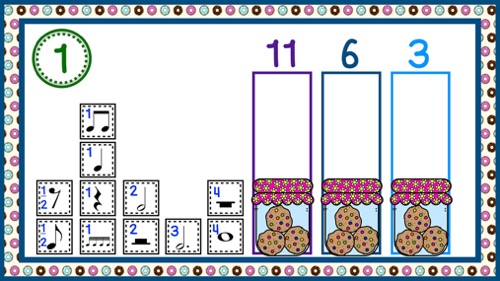
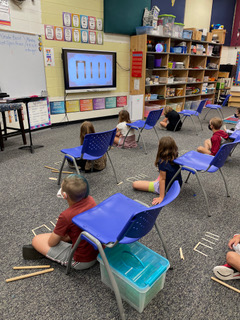
I made this slideshow as a Smart Board activity and Powerpoint. I wanted to give myself options to see which worked the best. I ended up using the Smart Board option. I dragged the note squares into the correct box or “cookie jar” so the correct number of beats was in each jar. There are about 20 slides with different number amounts. Every slide has the 3 numbers equaling 20, so all of the note squares are used for each problem. I could have continued in this way, going through each slide and having an individual student at the board, but that wouldn’t accomplish my goal of whole class engagement. I gave each student a baggie with the note squares and numbers. Some students would prefer to manually move the notes to figure out the problem, so I made the manipulatives for those types of students. After they put the note squares into the 3 piles, they drew the notes on a worksheet.

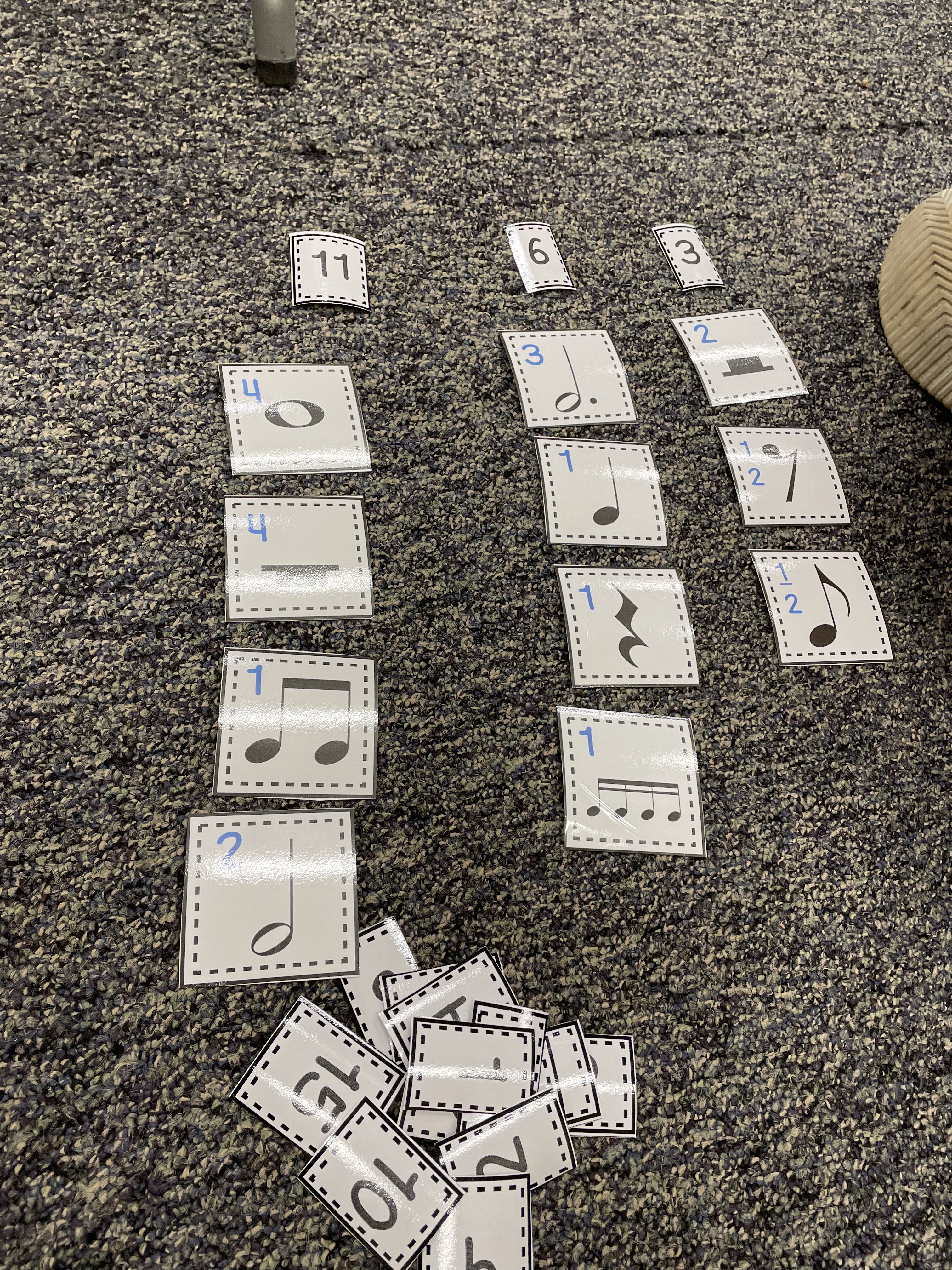
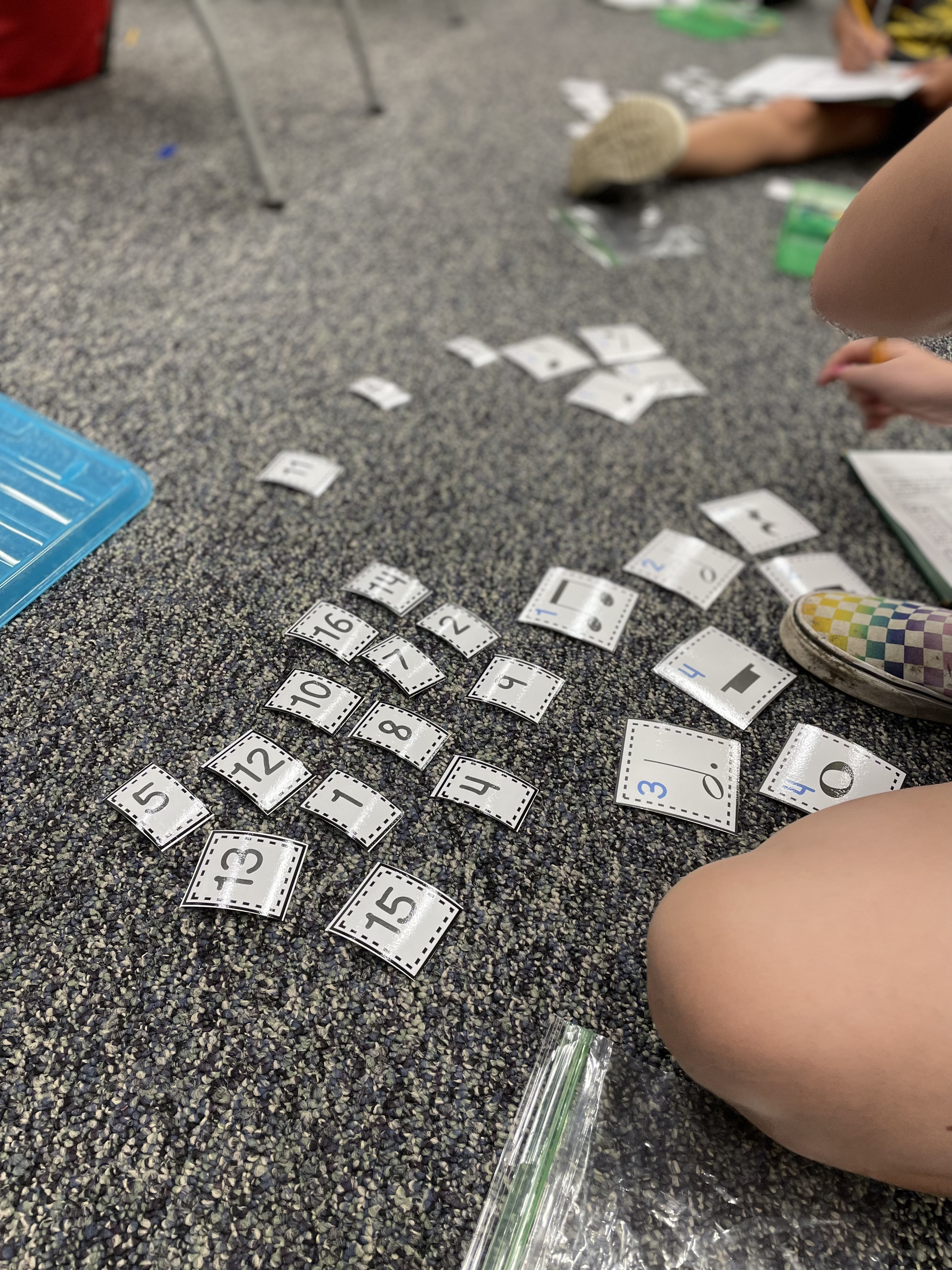
Even though there was a worksheet involved, I think most of the students enjoyed the activity. I was very pleased with the math connection, and also the rhythm practice drawing music notes. It could also work as an assessment, since everyone is involved and there is a worksheet to hand in.
I was surprised at how long it took for everyone to draw the notes. During my 30 minute class, I explained the activity, did the first slide/problem on the Smart Board, passed out materials, and gave work time. Most students only completed 1 or 2 problems (of the 20). I don’t know if I would ever have them do the entire packet, but I definitely will get it out at a later date and have them complete some more. I could also use the Smart Board version as a center and not use the worksheet.
If you are interested in doing this activity with your class, here is this product listed on
Bucket Drumming
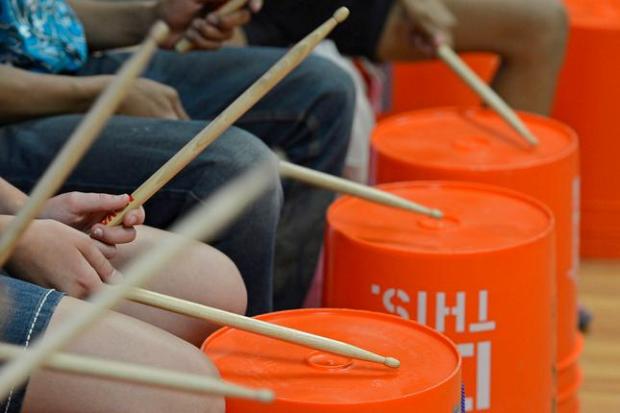
Since I have all of those buckets from Drums Alive, I decided to give bucket drumming a try this year. I purchased a subscription to www.bucketdrumming.net. There are tons of how-to videos and song covers. Each video shows a person playing the drums from a top view and front view. The rhythm is also displayed on the video. Here is a preview on YouTube you can check out:
I’ve been using this website with my 5th graders. Many of the songs have a simple and difficult version so I could see it being used in junior high or even high school.
Drums Alive

I discovered an awesome program called Drums Alive. I went to a one day workshop and purchased the curriculum. It is a fun, researched based program that combines music and physical fitness. I’ve teamed up with my school’s PE teacher to combine classes and wevdo this program together.
You can find out more information about Drums Alive on their website: Drums Alive
Here’s a sample of how I used the curriculum with all my classes (preschool-6th grade).
I have developed some routines that my students love. I have those listed on Teachers Pay Teachers here: Hit The Drum
Both Raining Tacos and Hit The Drum are great for elementary students. My listings on Teachers Pay Teachers include a download of the instructions and a video of me demonstrating the routine.
Some of my favorites have been routines I found on YouTube. This version of Cotton Eyed Joe is a cardio blast that my students always ask for!
My students also love this version of YMCA.
Rhythym basketball

A fellow teacher from another district showed me a video of her kids at a basketball half time performing a musical routine with basketballs. I thought that sounded super fun and put it in the back of my mind for a later opportunity. Well, that opportunity happened within a few months. The PE teacher needed to absent to attend a track meet and I had some classes on a field trip, or something, so I volunteered to do PE classes in my extra time that day. I made up a routine to “Can’t Stop The Feeling” and had a lot of fun teaching it to the 5th and 6th graders.
Too Much Noise by Ann McGovern

The book starts off with a man who is crabby about his noisy house. His floor squeaks, his bed creaks, the tea kettle whistles, etc. so he goes to the village wise person who tells him to buy a cow. Now he has all the house noises plus a cow. About 10 animals later, the wise man tells him to get rid of all the animals. Suddenly the floor squeak, bed creak and tea kettle are quiet, pleasant sounds. I always scan the pictures, make a slideshow, and project the pictures while reading the story so my hands are free and everyone can see.


Each house and animal sound gets an instrument assigned to it. I assign an instrument and sound to each student. Every time that sound is mentioned in the story, the student plays their instrument. By the end of the story everyone in the class has an instrument to play that represents a sound in the story. It’s also fun to let the students pick which instrument will be best for each sound.
This book is great for a substitute since there is no singing involved.
Mortimer by Robert Muncsh
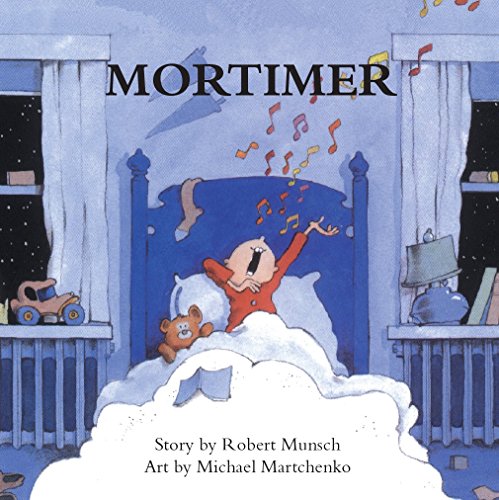
This is one of my favorite preschool-kindergarten books. Mortimer is the main character and he doesn’t want to go to bed. Instead of sleeping, he sings:

With preschoolers, we sing the song every time the words come up in the story. Sometimes I add egg shakers. They pick them up and shake while we sing and put them down as soon as the song is over. With kindergartners I add a Boomwhacker part. Usually something involving a C, E, and G. I make up a pattern and they play that whenever the song occurs. In 1st grade the students are ready to rotate to a different instrument after the song is sung. I put the instruments in a line and show each part before we read the story. Students rotate to the next instrument every time we sing the song.
The King, The Mice and the Cheese – by Nancy Gurney
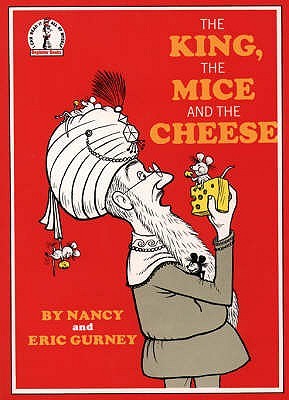
The story starts out with a king who loves cheese. His cheese makers make cheese so good that everyone can smell the yummy cheese. A mouse smelled the cheese and told all his mouse friends to come check it out. Soon there are hundreds of mice living in the castle. That’s where this song comes in:

The king wants to get rid of the mice so he meets with his wise men and they decide the best way to get rid of the mice is to bring in a bunch of cats. That’s where this song comes in:

Unfortunately, now there are hundreds of cats living in the castle. Then you sing the mice song, swapping “cats” for “mice”. The story goes on and on. The kids love trying to predict what animal will be called in next.
If you would like to use these songs with your music class, you can download the sheet music for free on Teachers Pay Teachers: The King, The Mice and The Cheese.
 Making Music Class Fun